← Back
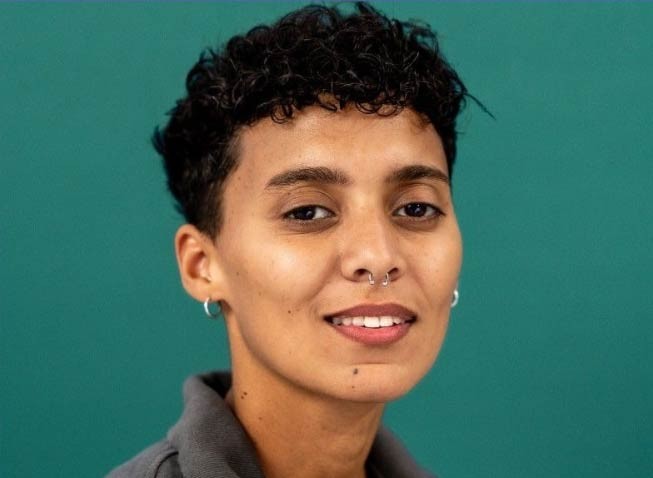
Meet the Team: Nadine Ellis, Marine Science Technician
Storms that disrupt offshore operations, sudden changes in sea temperature, or shifting currents that impact entire marine ecosystems, the ocean is constantly evolving, and not always in predictable ways. For industries, scientists, and decision-makers, these uncertainties can quickly become critical challenges.
This is where ocean monitoring plays a key role. But collecting reliable data in such environments is far from simple. Equipment must operate in harsh conditions, often far from shore, and every measurement must be accurate to be useful. Behind these systems, there are experts who ensure everything works as it should.
At CLS Southern Africa, Nadine Ellis is one of them. As a Marine Science Technician, she works at the intersection of science and operations, helping turn complex ocean data into reliable insights.
From data gaps to real-world solutions
At CLS Southern Africa, ocean monitoring relies on a combination of technology, precision, and human expertise. Instruments must be deployed, systems must work in extreme conditions and Data must be reliable.
Nadine Ellis plays a key role in this process. As a Marine Science Technician, she works daily with metocean instrumentation and systems. She supports projects where science, technology, and environmental monitoring meet.
Her role is clear:
- Ensure instruments are functioning properly
- Support the collection of ocean data
- Contribute to operational and scientific projects
“I have a real passion for the environment, especially the ocean, and I truly enjoy problem solving and innovation,” she explains. “Being a marine science technician feels like a dream job. It doesn’t really feel like work.”
Ocean monitoring driven by curiosity and constant learning
Nadine did not start in operations, her background was rooted in research, laboratories, and academia. Joining CLS marked a turning point. It opened the door to a more operational side of marine science, including meteorological and field-based activities.
What stands out in her journey is the learning curve, it is constant and part of the job.
“Even stepping into a technician’s role, it’s a position where you can learn something new every day. That has always been very important to me.”
This ability to adapt is essential in ocean monitoring. Every deployment is different, every dataset brings new questions, and every challenge requires practical solutions.
Turning teamwork into impact
Beyond technology, collaboration plays a central role. Nadine works alongside colleagues who share the same mindset : Innovation-driven, Solution-oriented and Focused on results.
For her, teamwork is what transforms technical challenges into real achievements. At CLS, she also discovered something deeper. The impact of everyday work.
“I’ve learned that no task is too big or too small. Every contribution matters when you’re working towards a bigger picture.”
Through her role, Nadine contributes directly to projects that support environmental understanding and ocean sustainability. Her work feeds into a broader mission, one that connects data, science, and action.
Because in the end, ocean monitoring is not just about technology, it is about people.